

Termination Without a Reason: Why Lawyers Love It, and How Smart Employers Protect Themselves
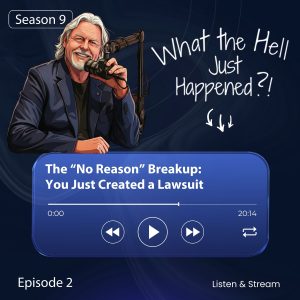
Many business owners believe “at-will employment” means that when firing someone, not giving a reason is more protective than giving one. In this episode, Paul Edwards and Jennie (Director of Compliance at CEDR HR Solutions and former employment attorney) dismantle that myth and explain why “no reason given” can be one of the fastest ways to invite legal trouble.
They break down real-world termination mistakes, why vague or abrupt firings often push employees straight to a lawyer, and how even legitimate issues (like tardiness or performance) can start to look like discrimination when you don’t communicate clearly. You’ll also hear why coaching and documentation matter, and how to keep termination conversations respectful, brief, and defensible.
You’ll learn:
Have an HR situation you want Paul to unpack on the show? Record a voice memo and send it to podcast@WTHJustHappened.com. Learn more at WTHJustHappened.com.
CEDR HR Solutions is here to help when your HR issues leave you thinking, “What the hell just happened?!”
Paul: And I think we have to just stop for one second. At-will employment. I have to, for those of you who have heard me say it so many times at-will, employment is not a shield. It doesn’t protect you. Just because you can let someone go for any legal reason or no reason at all, you cannot let them go for an illegal reason. And that takes us back to the conversation that we’re having here.
Jennie: Yeah. And even if you have a legal reason…
Voiceover: You’re about to listen to an episode of What the Hell Just Happened? Join Paul Edwards and his guests as they discuss interesting HR topics and solve some of our listeners’ submitted questions.
Paul: And occasionally I’ll go off topic to talk about whatever I want. Think barbecue, space exploration, growing your business, things that interest all of us.
Paul: Jennie has a law degree and she has experience out in the real world, mostly suing employers. Right?
Jennie: Yes.
Paul: Yeah.. Yeah, you were on that side. So look, when you want to prevent the people who sue employers from being able to be successful at it, you bring someone in who is good at that and say, ‘What would frustrate you?’
Jennie: Yeah.
Paul: If you were trying to fire up a lawsuit against someone. So, so you know, she came from the dark side to the light side, is what we like to say.
Jennie: I mean, it depends on how you look at it.
Paul: It does, it depends on how you look at it. I get triggered by anyone who gives the guidance out that says, because you’re an at-will employer, you don’t need to give someone a reason for letting them go. Or in some cases, as we’ll talk about today, just as a matter of course, don’t give a reason because they have been told or they have bought into an idea that if you don’t give a reason, then no one can hold the firing against you, which could not be further from the truth. I found a really good question that was posted in a, I think it’s a dental subreddit, where there’s an employer asking for opinions from everybody else in the group. ‘I have an employee who’s been working with the practice for some time, and it’s not going well. The manager says she’s untrainable, and now I need to let her go. Any advice for a first-time fire-er?’ Very good, very good question.
Jennie: Yeah.
Paul: The first answer reads like this: ‘Don’t give people a reason at all for firing them. The first time sucks. Then it gets awesome. In quotation marks: Hi, employee, this isn’t working out. Today’s your last day. Here’s your final paycheck. That’s it. You don’t say anything more. And when they say But why? But why? You just answer. It’s not working. Thank you. Please leave. That’s it. Turn your back. Work on something. Leave the room. Whatever. Just end the conversation.’ He goes on to say: ‘These idiots will be shocked. They’re facing consequences for their actions. They will just leave.’ That was the end of that advice.
Jennie: Coming from the place where we would sue employers, I love this answer.
Paul: You love this answer, why?
Jennie: I love this. This would be a great way for me to sue you.
Paul: Well, share with them why? Well, there’s something missing when you don’t give an answer. Pretty clear what that is.
Jennie: Yeah. What is the reason for firing them? And then also this very abrupt ‘I’m not even talking to you. Get out of the office’. It’s going to leave the employee feeling really, I hate this word, but triggered, embattled and feeling like ‘What just happened? This was so disrespectful’. And if they leave the meeting feeling that way, they’re more likely to go home and complain to their friends, their family, and be convinced something went wrong and call a lawyer. So the worse that meeting goes, the more likely it is it’s going to be a problem. But, Paul, I, I don’t think I’ve ever suggested firing someone without having a reason. And I don’t think you have either. That’s not a thing.
Paul: I don’t think it should be a thing.
Jennie: It’s not. There’s always a reason. And even it could just be we just don’t get along. It’s a personality fit.
Paul: You’re not a fit.
Jennie: But that’s a reason.
Paul: We’re having trouble giving you feedback that you can take action on.
Jennie: Yeah. Also, it’s a little suspicious. Like, ‘You can’t tell me the reason why? What are you hiding?’ That’s the lawyer avenue for that. Because, you know, someone comes to a lawyer and says, ‘Well, I got fired, and they said it was because of I’m late to work all the time, but like, other people are late too.’ So as a lawyer, it’s like, ‘Okay, we can talk about that, but you’re late to work. That’s a valid reason to fire you’. They come to me and say, ‘They didn’teven tell me why I was fired. And here’s this other stuff that was going on.’
Paul: One of the details I left out was that this person had actually been working in there for like four years, when they were deciding to let him go and, well, people had questions about that. Here’s my favorite one: How could someone work at the same office for four years and be so terrible at their job, who let them keep working? And then there were many other comments. I just felt they were so pragmatic and such good guidance, but I was afraid it was getting lost on the post.
Jennie: Yeah.
Paul: Most of which was, ‘Are you sure you’re training-’, one person said ‘You need to look at your manager.
Jennie: The manager says they’re untrainable. What does that mean? What have you done to try to train? Have you looked at what the manager is doing? Have you looked at what the employee needs to be- have you looked at actually making this employee successful? And that could be by something you’re doing. Or maybe the issue isn’t that employee, the issue was your manager.
Paul: Or you, because you were in the back, thumbs wet for a dentist or you’re, you know, busy doing all the other things you do. And maybe the person who was responsible for training this person didn’t do a good job. You didn’t have the checks and balances in place, but we did get some clarification from the original poster. So OP said, ‘Look, I just bought the practice’.
Jennie: Right.
Paul: So that makes sense because you can’t own a practice for four years and not have let someone go or had to deal with the separation in some way. And he was like, ‘I just bought it. I’ve only been here for six months. She worked here the years previous to that. And the office manager says she’s tried and she’s just not trainable.’ And, you know, after seeing his kind of back and forth and comment, I think he gave enough information in there where the group began to understand she just was never a good fit.
Jennie: Yeah. She wasn’t a good fit.
Paul: She was a warm hire.
Jennie: The prior owner kind of slide or she was doing just enough for the way the practice was run previously. But not with the new expectations.
Paul: Exactly. So, you know, I want to go back to the kind of the consensus of the group, which was very, very important. They were basically advocating for ‘You need to make sure you’re doing everything that you can do. This is an opportunity for you and your manager and for leadership, even in a very small practice, to make sure you’re doing the best you can do to raise someone up.’ I think that all those other folks that were in there probably been in practice for a while, and they know how hard turnover is. Replacing people is costly and draining and all that stuff. So you really could see that sentiment in there. And that’s where I really begin to have a problem with this guidance that we see about not giving a reason. I think that when a person’s let go, they should either immediately or upon honest reflection, feel like they could see it coming.
Jennie: Yeah. It should not have been a surprise.
Paul: No. Now, maybe in your first 90 days and I just come in and you don’t really just know and I just say, ‘Hey, I’m sorry, but you’re not a fit in here’.
Jennie: Normally, you know, you give people a chance. So it’s either something really huge just happened or you’ve been addressing something with them methodically. Formally or informally. It’s, you know, tardiness to work or taking too long with the patients or not following the procedures correctly, whatever it is, that they’ve been told, ‘You need to fix this’, and they’re not fixing it. And so, you know, some employees may still never see it coming, like, they don’t think they’re actually going to get fired for it, but and that you can’t fix that per se.
Paul: But they but upon reflection, they should be. Yeah.
Jennie: ‘I mean, they have been getting on my case about not sterilizing instruments for six months. And I did try to use a dirty instrument in that patient’s mouth the other day.’
Paul: Yeah. By accident.
Jennie: By accident. Yeah.
Paul: Okay. So I look back on my life, I’ve only been fired twice. Only? There’s probably people listening going, ‘Twice?? Oh my god.’ Look, I think I started working when I was nine, y’all, I kid you not. If you look at my Social Security record, I, my my grandfather made the first contribution to my Social Security at nine years old, and I was working on the farm. What was the point of me telling everyone that?
Jennie: You’ve been fired twice.
Paul: I’ve been fired twice. Both times I, I could see it coming. I mean, I, I remember one, I’ve told the story before. He said, ‘You know why you’re in here, right?’. I went, ‘Yep’. And let’s be honest, I needed, I needed a j-o-b job. What I needed to do was pay my bills on time. I did not like the job. I wasn’t a good fit for it. I was never going to be a good fit for it. And I had not the greatest attitude, even in those instances when we weren’t going through anything that formal, they were talking to me and saying, you know, telling me that I wasn’t doing a good job.
Jennie: Yeah.
Paul: And I’m self-aware enough. I knew I wasn’t doing a good job.
Jennie: Yeah. And so you should be able to, kind of like that first answer said, ‘First of all, tell them the reason for termination’, and from then it, it should be a short meeting. But you need to be respectful. And I was actually just thinking about this because we got a lot of CEDR members asking, ‘Well, what do I say?’
Paul: Yeah.
Jennie: And, you know, it’s real hard to script a conversation, but it can be really helpful to do that, especially if you’ve not done it before. Because it’s not an easy thing to do. I just agree with this guy who said the first time sucks, then it gets awesome. I have not experienced it being awesome. It’s terrible. You are giving really bad news to someone, but I think if you’re thinking about terminating someone, it may be helpful to think, are you able to start your termination script by saying, ‘As you know.’
Paul: Yes
Jennie: ‘We’ve had concerns about XYZ.’ Like, are you able to say that? And if you’re not, maybe it’s not appropriate to terminate yet. And it may be depending. But you know the employee ideally isn’t blindsided, you know.
Paul: Right. CeCe and I talked about this in a couple of other podcasts that are in this season. We’re more talking about documentation and stuff like that. But this is about that. You let someone go, you don’t give them a reason. But it’s obvious that they’ve been late 16 times in their, in their first two months. You could just put it in front of the judge and go ‘Look’. This isn’t going to end in front of a judge. If you put it in front of anybody and go, ‘Here’s my proof.’
Jennie: Here’s their clocking record.
Paul::Right. ‘Here’s their clocking records, would you hold on to them?’ And so that was for me, I was late one more time. Yeah, okay, fine, I was like 21, and I was a musician on the side. And my band played out all the time. And I was out till 4:00 in the morning, would come to work at 7:30. So, going back to sometimes you have these little automated things that can support, could support you and cover your rear end if you didn’t give a reason. But that’s very rare.
Jennie: And also, let’s say that is the situation. So you’re firing someone because they’re late all the time, but for whatever reason, you take this advice, and you don’t tell the employee that. You just say ‘You’re fired,’ and they’re not told why. And you had this completely legitimate record of timekeeping. We could have just told them. So now what can happen is they go talk to an attorney, and they say, ‘I think I was fired because they always seemed to have more of a problem with me than my peer. And I happened to be X, y, z. I’m male, I’m the only male in the office, and everyone else is female. Or I’m the only one that is, they know is going to get pregnant in the next few years.’ Color of skin, whatever it is.
Paul: ‘I heard, I heard that anytime someone told the owner that they were pregnant, that they that they ended up not being there. And I told my manager that my husband and I are trying to get pregnant right now.’
Jennie: So what can happen is, you have this record of tardiness, but you never say it. So they say, ‘I think they’re actually firing me because of this discriminatory reason.’ And so now the employer is going to have to turn around and say, ‘No, no, no, it’s because you’re late all the time.’ Well, it’s going to now be even easier for the lawyer to be like, ‘Well, what about this other person who was late?’
Paul: Let me see all those records. All right.
Jennie: Let me see all those records and see did you fire everybody who had this same record of tardiness? And if you have it, if you treated someone slightly better who was in a very similar tardiness situation, it’s going to read more like discrimination. Even if it never was.
Paul: So I want to give one other example. I remember about nine years ago, we had someone come to us for services. They had just gotten over a lawsuit. They had hired an employee who had sued the previous employer or a previous employer for discrimination, had to do with maternity leave. And she was, she had literally set him up. And I’m telling the story because he went out to, he actually went to get guidance because he thought something was fishy. He went to an attorney. I guess the attorney didn’t understand employment at will or the risks that were involved, or didn’t ask enough questions and guided him through terminating her, telling him that he was an at-will employer and that he had the right to let anyone go that he wanted to. And so they let her go. And it was literally a gift to opposing counsel. So, you know, at-will employment is a very important tenet, but it is not a bulletproof shield. Obviously, there are many, many limits to it. So earlier we talked about, you know, giving some reason. And the more specific you can be, the better off you are when it comes to defending your decision. So you kind of want to be careful about getting too subjective, which is, you’re not performing well. What does that mean? You’re not getting things done on time. What does that mean? You, you you aren’t good at your job. What does that mean?
Jennie: What does that mean?
Paul: And so I guess what we’re advocating for here is through notes and progressive corrective coaching, where it’s warranted, where it is made a little more official and distributed to the employee, you’re essentially creating your de facto clocking system. You are clocking the problems. You’re getting them into the record, again, through notes and through other methodology, whereby you now have a story to stick to. So that was my other thing, is that when you wan,t when you give a reason, you damn sure better have the documentation to back it up.
Jennie: Yeah.
Paul: And I think we have to just stop for one second. At-will employment. I have to, for those of you who have heard me say it so many times at-will, employment is not a shield. It doesn’t protect you. Just because you can let someone go for any legal reason or no reason at all, you cannot let them go for an illegal reason. And that takes us back to the conversation that we’re having here.
Jennie: Yeah. And even if you have a legal reason, if you can’t back that up with your documentation, and your documentation should include a termination letter stating the reason, you know that you’re in trouble. And that’s where, working as an attorney, I often saw the problems where, like, I don’t even think the employer intended or meant anything bad, but they just didn’t do this right. And they wrote nothing down. And now we have a lawsuit. And actually, I hadn’t thought of this until just now, but timing is interesting. Paul, I don’t know if you saw this, but yesterday, CEDR sent an email to all of our members in Washington state about a new law that’s going into effect later this later this month, which is July 2025, depending on when you’re listening to it. In Washington, it’s an at-will state, so technically, you don’t have to give a reason for termination. However, now former employees have a legal right to ask their former employer to have in writing the reason for termination and the date of termination. Which, by the way, you should already be doing. If you’re a CEDR member, we’re going to write you a termination letter. We always tell you to do it. But I think what’s happening is a lot of states are seeing this happen, where employers just think they don’t have to tell the employee. And states are just literally writing legislation saying, no, you have to tell them.
Paul: I also want to say one of the hardest parts about owning your own business is realizing that you have people that work for you that are good. One day, they may be great, maybe the job outgrows them or something, and they’re not great at it anymore. Or you just have to identify that you hired someone, and no matter how hard they try, they’re not, they’re not going to do a good job. And so trying to find the person beyond the bill payer who is great at their job and want to do their job and have a purpose in life, working for you, doing the job like work, you know, getting to that is something you have to do as a leader, as a manager, as an owner, you have to identify those skills. You got to bring those skills out of them. You got to make work a really, really good place. And in order to do that well, you also have to identify the people who shouldn’t be there, coach them, identify what the issues are. If they need to get out, you got to get them out of there. They need to go do something else that they’re more suited for. They might do a better job. And make no mistake, letting people stay that shouldn’t be, eventually ends up infecting other areas and causing problems. So, in closing. Jennie, we’d like for you to give a reason. We like for you not to give a dumb reason. Don’t tell them you fired them because they got pregnant for the fourth time.
Jennie: Yeah, don’t say that.
Paul: Don’t say that. And don’t make up another reason for that. You don’t, you know, you just you don’t get to let someone go for that reason. What the hell just happened is, is that someone decided to fire someone and give them absolutely no reason, just kind of do it in the most abrupt way. And, the result of that is you have an incredibly pissed-off person who’s just left, and they get to make up their own reason why you let them go.
Jennie: Yep.
Paul: So, Jennie, I hope we gave him enough here. I know we’ve kind of been all over the place. Everybody, what we’ve learned here today is I’m triggered when someone says, ‘Don’t give a reason at all’, just as a methodology for working with employees. Everybody should have coaching. You should be trying to help them be successful. It is a privilege to lead people. And if you approach it from that point of view, then you naturally are trying to coach people along. You don’t want to surprise someone and just walk in and say, ‘You’re fired’, don’t give them a reason, and turn your back on them. That’s insane. That is not the way to grow people. That is not the way you want your other employees to see you acting in front of them. So, anyway, Jennie, I really appreciate your input today, and hope to see everybody on the next episode.
Voiceover: Thanks for joining us for this week’s episode of What theHell Just Happened. Do Paul and yourself a favor, and please share the podcast with your network. If you have an HR issue, question, or just want to add a comment about something Paul said, please record it on your phone and send it to podcast@WTHJustHappened.com. We might even ask if we can play it on the show. You can also visit WTHJustHappened.com to learn more about the show and join our HR community. Don’t forget to like, subscribe, and join us again next week.
Friendly Disclaimer: This information is general in nature and is not intended to provide legal advice or replace individual guidance about a specific issue with an attorney or HR expert. The information on this page is general human resources guidance based on applicable local, state, and/or federal U.S. employment law that is believed to be current as of the date of publication. Note that CEDR is not a law firm, and as the law is always changing, you should consult with a qualified attorney or HR expert who is familiar with all of the facts of your situation before making a decision about any human resources or employment law matter.
A Blog Written by CEDR, written by HR Experts to help you run your practice.

Did overtime become tax-free? No. The law created a federal income tax deduction for the premium portion of qualifying overtime...

Employers have always needed to be vigilant about complying with immigration laws, most especially with federal I-9 forms and E-Verify...

You can generally require that an employee use their paid vacation time toward any time off they take.
