Many states have already increased (or will be increasing) their required minimum wages in 2017, and that’s on top of a slew of recent increases in 2016. Are you up to date on your state’s minimum wage requirements?
CEDR’s 2017 Minimum Wage infographic is a great way to make sure you’re aware of recent changes and are paying all employees properly for their time. Simply hover the mouse cursor over a state to see what changes will occur in 2017, or confirm your state’s current minimum wage. Plus, take a look at your neighboring states to see how your minimum wages compare!
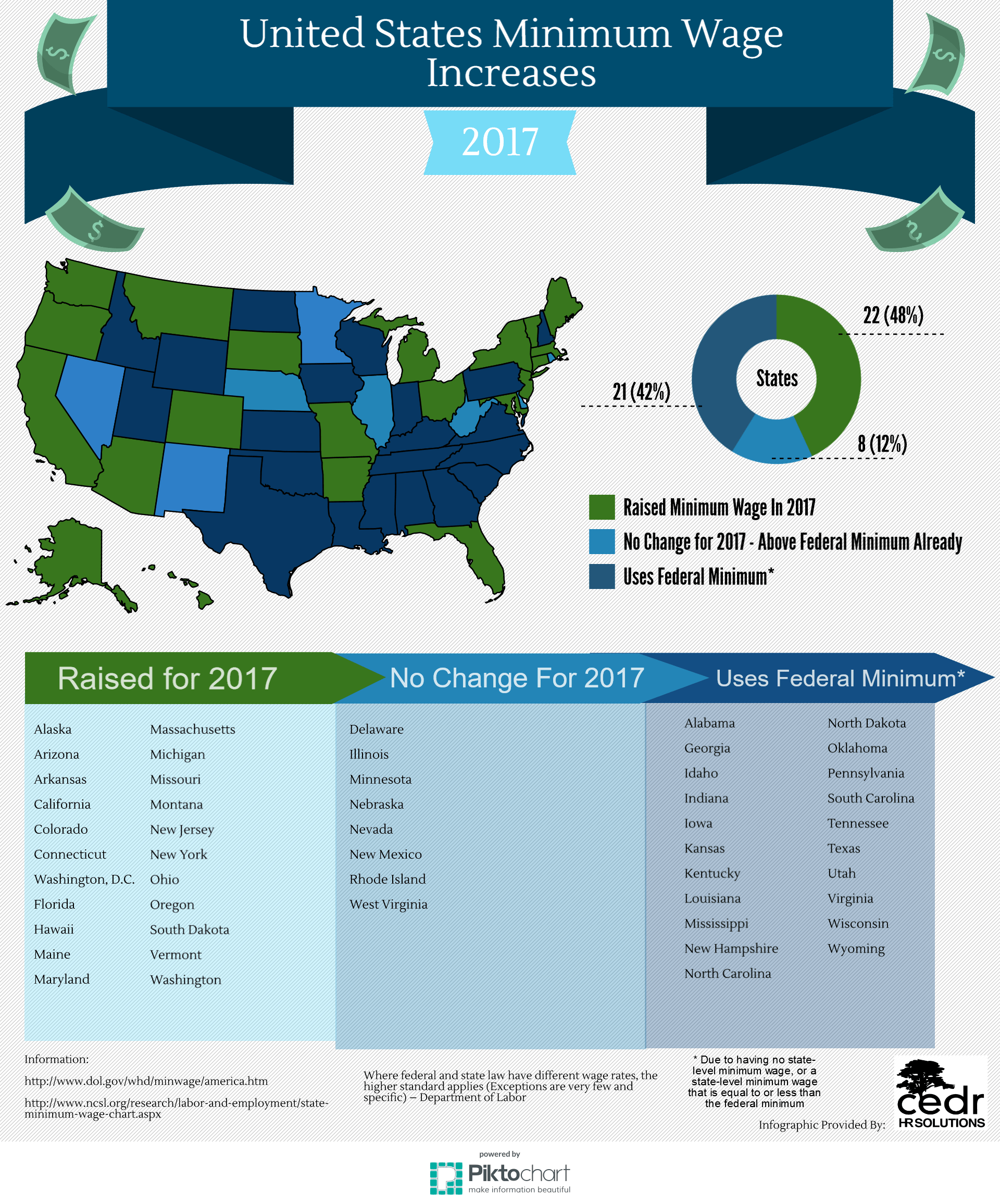
Some states do not have a minimum wage defined by state law. For those, the federal minimum of $7.25 applies. Additionally, for states that define a lower minimum wage, the higher federal wage applies in most cases.*
We would love it if you share this infographic with other employers who will find it handy. Feel free to post it on your blog or Facebook, or share via LinkedIn, Twitter, Pinterest, or your favorite forum. All we ask is that you link back to this HR Base Camp post with a thumbnail image, or by using this embed code:
References used in the creation of these infographics include:
*Note that some states have exceptions to their standard minimum wage for certain types of employees, or permit a lower minimum wage for very small businesses. For a more thorough listing of minimum wages in each state, click HERE. Or, find out more about exemptions for specific occupations and/or industries from the State Labor Offices linked HERE. Also, some cities or counties set a higher minimum wage than the overall state.
If you have questions about paying your employees properly and you’re a medical or dental employer, practice owner, or office manager, please feel free to give CEDR Solutions a call. You can reach us at 866-414-6056. One of our HR Advisors will be happy to assist.


Friendly Disclaimer: This information is general in nature and is not intended to provide legal advice or replace individual guidance about a specific issue with an attorney or HR expert. The information on this page is general human resources guidance based on applicable local, state, and/or federal U.S. employment law that is believed to be current as of the date of publication. Note that CEDR is not a law firm, and as the law is always changing, you should consult with a qualified attorney or HR expert who is familiar with all of the facts of your situation before making a decision about any human resources or employment law matter.
A Blog Written by CEDR, written by HR Experts to help you run your practice.

Did overtime become tax-free? No. The law created a federal income tax deduction for the premium portion of qualifying overtime...

Employers have always needed to be vigilant about complying with immigration laws, most especially with federal I-9 forms and E-Verify...

You can generally require that an employee use their paid vacation time toward any time off they take.
