

Employees don’t usually quit “out of nowhere”, but for managers, it can feel that way. 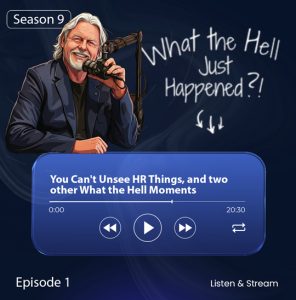
In this episode, Paul Edwards sits down with CeCe, COO of CEDR HR Solutions, to unpack why surprise staff shortages happen and what leaders often miss before employees walk out the door.
Unexpected turnover can leave business owners scrambling, frustrated, and short-staffed. Paul and CeCe break down the early warning signs managers overlook, the HR blind spots that lead to sudden departures, and how better communication and leadership habits can prevent staffing crises before they start.
You’ll learn:
– Why “surprise” employee exits are rarely sudden
– Common management missteps that drive quiet disengagement
– How to spot early warning signs before turnover hits
– Practical steps leaders can take to reduce unexpected staffing gaps
– What to do when an employee leaves without explanation
Whether you’re a small business owner or a people manager handling HR issues daily, this conversation offers clear, actionable insights to help you protect your team—and your business—from surprise turnover.
Paul: So now he’s like, oh my gosh, what can I do? What should I do? So what did he do? CeCe, he immediately went on social media and checked out.
CeCe: Of course he did.
Paul: He checked out her social media. He found out two other things.
Voiceover: You’re about to listen to an episode of What the Hell Just Happened? Join Paul Edwards and his guests as they discuss interesting HR topics and solve some of our listeners’ submitted questions.
Paul: And occasionally I’ll go off topic to talk about whatever I want. Think barbecue, space exploration, growing your business. The things that interest all of us. You know, these are kind of plot twists that can really ruin your day or your week or your life if you’re the manager or you’re the owner. CeCe, welcome to the show.
CeCe: Thanks, Paul. Happy to be here.
Paul: I’m glad you’re here. For, if you haven’t listed the show before, CeCe is now the COO of CEDR, so I’m bringing her over because she has lots of HR experience now, she’s getting, not that she didn’t have before, but now she’s getting even more business experience. So everything becomes very real at some point, right?
CeCe: Yeah.
Paul: Just to, just get started. So you have a lot of business knowledge. But let me ask you this. CeCe, now you’re in the COO role, and you see the next application of your efforts from before, which was a lot. You’re very good at recruiting.
CeCe: Thank you.
Paul: I don’t think you like it.
CeCe: But who does?
Paul: But I think the thing that controls us the most from the business is what we’re talking about today. The question or the thing that came in that they wanted some help with was ‘Our front desk coordinator, who signed our handbook, which says that you’re supposed to give us two weeks notice, gave me three days notice. She didn’t give me two days’ notice.’ And for the listener, I’m going to add the caveat that they, what they were asking us in long form was ‘What can we put in this handbook to make these people have to give notice’, and the other caveat that I want to put in here, CeCe, is that this person that they hired, who didn’t last very long, but who also didn’t give much notice. She was a friend of a friend of somebody who worked there. So when they went to fill this position this last time, and I think maybe the last couple of times they did the warm body thing, a friend of a friend.
CeCe: They just snatched up who was available.
Paul: They did, they grabbed who was available and who was easiest. And I get it, CeCe, because in small businesses like all of ours, sometimes some days, some weeks, some moments, you don’t have any time.
CeCe: And you don’t have a backup phone team or all these people who have extra time to dedicate to filling that gap. But now you’re really at ground zero because you don’t have a job ad that you did last time to just tweak, and you didn’t learn anything from your hiring process the last couple of rounds.
Paul: You don’t even probably know why she failed. You don’t know why she left, other than what she’s willing to tell you. And that’s why, you know, you take all of that with a grain of salt. So this takes us back to lesson number one. The process of hiring is an exploratory learning process.
CeCe: Absolutely.
Paul: For the business, for the people who are doing the hiring. It look, if you’re the owner listening to me and you’ve been the one doing the primary hiring, if you really don’t want to be in the hiring process, in the recruiting process, and you still want to get good results, you have two choices. Find someone like CeCe and pay her $150,000 a year to recruit your people, or put a system in place that is repeatable that anybody can kind of step into. Use it and get good results. I don’t know that they’re going to get CeCe results, but they’re not going to come anywhere close to the kind of results that you can get without being systemized. Why is that, CeCe?
CeCe: Well, because you’re not learning from your experiment. You’re just plugging someone in the hole, and you’re not, you know, there’s that saying, ‘The devil you know’? So a lot of people have a tendency to want to keep the person who is not doing the good work because they can deal with their deficiencies. But it’s, it’s sort of the same concept when you’re not hiring, and you’re not out there looking, and you’re not talking to people, and you’re not hearing the answers to your questions, you’re never getting that light bulb moment of, ‘Oh, that is the answer I wanted.’ Sometimes you ask a question, and you don’t know what the right answer is until you hear it, and then once you hear it, you’re like, ‘That’s the person I’m missing in here. That’s the person who’s going to fill this gap that I have’. And if you’re not engaging in that process, then you’re, you’re potentially missing out on some real gold out there.
Paul: Right. Over at CEDR, they use the term difference makers. You always have that person bring something, either culturally new, preferably all of these things. They bring a new set of skills. They’ve gone through something you’re about to go through, and they’re going to be able to help you.
CeCe: Or missing perspective. I mean, I think that’s something really cool that we’ve been able to do here, is sometimes we bring in people, and I’ll include myself in that who have experience in sort of larger organizations, and you can adopt some of these things that they’re doing and plug them into a smaller organization. But if you’re never talking to people who have a different perspective, then you might be really missing out on some cool stuff that you could scale down but bring in that will really help your smaller office out.
Paul: I think, too, that you remember that you know that term, I still love it, ‘You have to put pen to paper’? It is, it’s a representative term, a colloquialism for, I didn’t say that very well, for you got to do the work. You got to put, you got to put the effort in the work in, in order to get something out of it. You don’t always know what the something is. And that’s never been more true than it is with hiring. Google put out the study that basically said it doesn’t matter what you do. Personally test, skills test, and do everything else. In the end, when we run the data, you get about a 50/50 shot. I’m from the South, you got a 50/50. We got a 50/50 shot at picking the right person. But here’s what I, here’s what I believe. I think you have a 51/49 percent shot. Because I saw 50/50 as ‘This is impossible’. So I truly believe if you want that extra 1%, which is, you know, gold as far as I’m concerned. You want to go through this process because I don’t really believe that you could just hire someone off the street that kind of, they’re breathing, and they’ve got all their teeth. And they can answer a phone. I don’t think you can get the best result out of that. So the other thing that I was just going to add, this guy has had this position go empty three times in the last 11 months. And so, first time shame on them. We could blame that employee. They’re terrible. Second, third time, shame on me. Shame on you if you are getting that kind of result. And what people tend to do is lean into ‘People don’t want to work, they don’t want to do things they’re not-’, and I’m here to tell you that just is not true. If there are people out there who don’t want to work, I’m sure they’re there. Your job is to not hire them, and I can tell you I can avoid hiring that person without even trying. I can ask enough questions to figure out whether or not that’s a person who wants to be working or whether or not they’re just here to try to fill the job.
CeCe: And with the right questions, you can also weed out a lot of the people who just don’t want to work in your office. That doesn’t mean there’s anything wrong with your office, but there’s a lot of people who don’t want to work there.
Paul: Yeah, they don’t want your culture. They don’t want your accountability. So we’ve done kind of the human part of this. We did it backwards from how CEDR does it. The ultimate question was, ‘How can I prevent her from leaving?’ And short of shackling her to the desk and locking her in there, you know, with a pee cup or something, and then throw her some stale bread. You know, throw her some crackers and some peanut butter every now and then to keep her there until the end of her notice period. There really is not anything that you can do here.
Your handbook is not a contract.
CeCe: You don’t want it to be.
Paul: You don’t want it to be. I hope you are in an at-will relationship with each of your employees. And let me restate the very simple version of that. At-will means that either party may end the relationship with or without notice. And this last part doesn’t get said enough: or consequences. It’s when you put in consequences, so you put something in, like ‘If you don’t give me two weeks’ notice, I’m not paying out your PTO’. If you put something in that, that has any kind of punitive measure to it, then you’re actually messing with your entire at-will status. It’s not just about these last two weeks. It’s the, it’s the entirety of it. We, we find this problem with golden handcuffs when people are put into an agreement that says that you have to pay this money back. By the way, these agreements don’t really work very well. They’re frowned upon. They’re not legal in many instances. The way that we see them come through and we’re like, ‘Oh, good Lord, we’ve got to get rid of this now’. The point to the golden handcuffs is, is that the employee can say, ‘I did not report the doctor’s associate brother-in-law for sexually harassing me at our other location because I took a course through the company and I’m obligated that if I don’t stay for a year, I have to pay back $12,000. As a debt. And I felt like if I told him what his brother-in-law’s doing to me, I was going to get fired’. And look, that does have to be true, by the way. They don’t have to prove anything.
CeCe: They don’t have to be correct, that they would have gotten fired.
Paul: They just, to a reasonable person, believe that is all they have to do. So the legality here is, is that if you want to maintain your at-will status, then the only other way to keep somebody is to incentivize them to, to stay. And even then, when I talk to the attorneys at CEDR about this, and I said, ‘Hey, I got a great idea’, they love that. The way I was exposed to this is a clinic up in the middle of Wyoming, Montana, or one of those states, in his agreement. Because he wanted to maintain the at-will status. He put in a huge incentive to give him 90 days’ notice, and he stepped that incentive down. So if you gave the full 90 days, what he would do is change their commission from, I believe, he was like a 29-30% commission. Really great practice, great guy in the middle of nowhere. So very successful because he was kind of the only dentist people could come to, CeCe, I think he would take their percentage up to like 45, 48%. He would almost, he would just barely, barely break even on them the last 90 days. But they would amass a small fortune. So, anybody listening you need to understand something. You can’t just take what I said, turn it into some kind of agreement and try to go with it. So there was a lot more that went into it. So barring something like that, there’s nothing you can really do to make people stay.
CeCe: Yeah. I mean, we need a little bit of a reality check there anyway because that, so the situation you describe, they’re benefiting from staying, right? So now you’re mutually beneficial agreement that you’re both getting something out of it. The owner is getting time to look for somebody without having to shut down or turn patients away or reschedule, and all of that. And and the associate is is benefiting. They’re getting extra money. So more than likely, they’re staying, and they’re in a positive mindset. They’re going to continue to do their good work. Are they really going to do a good job for you if you’re forcing them to stay?
Paul: What if they’re about to get $8 more an hour, doing the thing that they went to college for, which they were trying to find when they found you and they and you hired them because they need a job, and you’re paying okay.
CeCe: They’re not going to do a good job for you, and they’re not going to set your practice up for success with those patients that are walking in the door during those two weeks, or however long it is that you’re forcing them to stay there. So, you know, even if you could, do you really want to? Most of the time, the answer’s probably going to be no.
Paul: Yeah, I agree with that wholeheartedly.
CeCe: Yeah.
Paul: You know, we talked about it. If it’s a high state clinical provider or somebody like that, you’d have to reach out to somebody like CEDR to help you kind of work through and see if it makes sense for you to put something in place that you might be able to use to keep people from leaving. Don’t forget what we just said five seconds ago, keeping people in a role that they don’t want to be in. There’s nothing good that can come of that. So even if you incentivize them and they don’t want to be there, having them there may not be good for you. I think the next thing is to model the behavior that you want. By that, what I mean is, is that when you let someone go, when you exercise your at-will status, or someone’s not performing, you want to let someone go. If you model the behavior and you treat people well on the way out the door, and you don’t, do a ton of bad mouthing after they leave. And if you even pay two weeks’ notice, you know, go ahead and pay them whether or not you want them to keep staying or not. If you model good things for people, the good people who work for you will do you a favor in kind.
That’s been my experience.
CeCe: I agree with you. And it combats a lot of the sentiment online of ‘Why should you give notice? Your employer wouldn’t give it if they fired you.’ Well, you can be the employer who, who gives notice via still paying out that two weeks.
Paul: Yeah, exactly, exactly. I saw- I’m okay, okay I’m taking a left turn. I can share this. There’s a guy out there who’s a dentist who’s a comedian. And, I caught a little bit of his standup.
Dr. Brady Smith: Derek, knew I was local, and he said, ‘Hey, do you want to come, open for me? You can do 20 minutes.’ And I was like, Absolutely. That sounds fantastic. And I thought that he was going to also call my hygienist, and that she would come and do the first 17. And then I would come in for the last three. And just tell everyone, ‘Good job.’
Paul: I mean, I wish I knew his name. Maybe I can put it in the show notes or something. He was pretty, he was pretty hilarious. So anyway, doctor, for, for part B of our thing today with the staff shortages, doctor walks into this practice, you know, going by the operatories, and two of his employees are in with a patient. I think the hygienist is in there working on a patient, maybe the other person is helping take notes or something. You know, when they do that thing on your gums, when they’re like 2, 4, 3, one, I like to hear the ones in the twos and threes make me cringe. And I’ve got a couple of fours, by the way, everybody in my defense, CeCe, they haven’t changed in the last eight years. I know you were just concerned. You were like, ‘Paul.’
CeCe: How’s your dental hygiene?
Paul: I feel pretty good about it. And I have a really good dentist here, Dr. Mitchell, by the way, if you’re ever in Tucson, go see Dr. Mitchell. So walking by, he hears the employee, who’s kind of a new employee. She’s very new. Tell the patient that she’s expecting.
CeCe: Mmm. That’s how you love to find that out.
Paul: That’s how you like to find that out. So now he’s like, ‘Oh, my gosh, what can I do? What should I do?’ So what did he do, CeCe, I know you’re curious. Ask me what did he do.
CeCe: What did he do, Paul?
Paul: He immediately went on social media and checked out, checked her, checked out her social media, and he found out. Yes. She’s pregnant. They’re expecting. He found out two other things: that it was going to probably be a bit of a complicated pregnancy. And the reason why is because she has been trying to get pregnant for the last 3 or 4 years. So now he’s got three pieces of information, one of which is, okay, she’s preggers, two of which I really wish she didn’t have. You’ve heard us say this on the show. You can’t unhear what you’ve heard. I can’t unsee what you’ve seen. But there is a twist. Okay.
CeCe: Oh, love a twist. There is, there always is.
Paul: There is a twist. Well before okay, before I add the twist, I need to say this: pregnancy is a protected condition. Once you know, your obligations kick in immediately. And some of those obligations are not to take into account, in this case, the things that he learned. Right? So you’re not supposed to know that this could be complicated. And he should not be making any decisions for her or for the business until she volunteers that or unless she volunteers that information to him. And so the other thing here is, is just from the legal side, there’s FMLA, there’s the PSL pregnancy. What is it?
CeCe: Well, there’s state pregnancy laws and then there’s the that, that newer one the pregnant pregnant fit fair…Pregnant Workers Fairness Act.
Paul: Is that what it is?
CeCe: Yeah. PWFA. Yeah.
Paul: Oh, boy. I was worried you wouldn’t be able to pull that one out. Thank you. Okay. And so, I guess point being, there are state and federal laws. Legislation is changing on this rapidly. And so you just kind of have to know all these things. And so not only do you have to know how to handle it as a human and as an employer, you also need to be quite aware of which rules apply to you and what you can and can’t do.
CeCe: Yeah.
Paul: Okay, now the plot twist. She’s only been with him for a very short period of time, and she definitely knew she was pregnant when she was interviewing for the job. And we, I’m not going to get into the weeds on that. But we get some doctors calling in, and they’re mad about that.
CeCe: Yeah. Yeah, yeah.
Paul: And I just want you to know we’re not going to get in that today. And if you’re mad about that, I kind of get it. But tough. Tough. You can’t.
CeCe: But it’s not actually a plot twist because it’s sort of a too bad so sad, unfortunately.
Paul: There’s not much you can do there. Adding to the plot twist, they’re a small practice. And you know what they did? They did a really good job doing what we recommended in the last segment, which is they had been having trouble filling her position, and they kept failing. The people kept failing at it, and they looked inward and they corrected their systems for hiring. And they found her, and they’re very, very happy with her. Oh, good. It doesn’t matter if they’re happy with her or not, but I just want to say part of the plot twist is that she’s showing that she could be an asset for the practice. What we would normally say, say, ‘Hey, this person’s leaving. It’s okay. You have everything in place. Let’s get that job out there, and we’re going to fill this position in 30 to 45 days instead of 90 days.’
CeCe: But they aren’t going to be able to go hire to replace her if she’s planning on coming back.
Paul: Exactly.
CeCe: Yeah. If that’s her intention when she goes out on leave.
Paul: Can I talk to her about it? What can I do? The answer is yes. You can talk to her. You have some information.
CeCe: And you should talk to her.
Paul: And you should talk to her. I got another plot twist. They are not our clients. They do not have any kind of a maternity leave policy because they have never had an employee come to them and say, ‘Hey, I’m pregnant and what do I do? I’d like to keep my job. How much time do I have? How do I do any of this?’ So let’s talk about that for a second. My take on this is, is don’t talk to her yet. Because you don’t have any of those things.
CeCe: Absolutely.
Paul: Get that established. We need a policy. And it’s, you know it’s 6, 8, 12 weeks. Typicall,y it’s going to be one of those things. We need to understand that some moms want to come back to work as quickly as possible. And the reason why isn’t because they want to get away from the baby or anything else. It’s because they need to pay the bills. And there’s no way for them to collect unemployment or anything else. And so they want their maternity leave to be as short as possible. There are others who have the support or the wherewithal to take more time. So we kind of have to be respectful of all of those things. And then there’s a process. We just need to ask. Let us know when you think about when you’re going to be taking off. And then there’s all these other things that come up in the process, which we are not going to get in today. CeCe, but this is the reason why the company you’re running exists. Is because the plot twist I’ve used that term too much. This, this is really the best use of that. A maternity causes all kinds of plot twists.
CeCe: Absolutely.
Paul: And much of it is out of everybody’s hands. Complications. Things go well. I mean, it’s just it’s just one big batch of plot twists. I can tell you the best thing in the world that you could do for somebody who’s working for you is going to be having kids, is have your stuff together, have your policy together, and help them get through the process. Because a lot of people, a lot of moms come to this expecting to get screwed. Expecting to not be treated well. They’ve been on the internet. They’ve seen the horror stories. And until they find out that’s not you, and the reason why it’s not you is because you’re well prepared and you have a policy in place, and you understand it, and hopefully you have some support like the folks over at CEDR. Until you have that, they don’t know. And let’s also say this: if you don’t think all the women working in your organization are paying attention to how this employee is treated, you are not aware of how things work in this world. So, got to be super transparent, have good policies, follow them, do the best you can, and support someone. At the same time, you got to run your business. What can we do? We started with be supportive. Congratulations.
CeCe: Yeah. I was going to say, hopefully you have an employee handbook, and you’re going to tell them, go read the policy. We’re both going to refresh our memories on what this says and maybe set a future date to talk about it once they have that information.
Paul: Open door. Got any questions about what you did? If I don’t have an answer, I’ll get it for you. But I would love for you to go ahead and let me know what your questions are. So this is a little bit of a tactic because now you’re getting some interactive process going with them. And you’re probably going to get more information you need. Like, specifically, how complicated is this? Oh, by the way. You’re going to pretend. That you did not go to their social media. Please, please.
CeCe: Don’t tell them that you did that.
Paul: Don’t do any of that just to open the door and say, hey I’m here. If there’s anything going on, you need something else from us, or it’s not in the handbook, come to me and talk to me. And let’s get this worked out. If it’s possible, you can kind of help us here. Like you can help us split your duties up, and kind of we’ll come to you and kind of make this work so that we can keep the wheels on the bus when you come back. You’re not going to come back to a mess.
CeCe: Yeah. Yeah, I like to know mostly for that purpose if they’re telling other people yet. Like are you telling your coworkers?
Paul: Oh, that’s a really good thing.
CeCe: Because it helps with
Paul: Just because you overheard her telling, don’t assume that you can come in and say, hey.
CeCe: Talk about it in front of everybody. Yeah. Because it helps with the planning. And then the communication between the other coworkers, who you might want to learn something they’re doing, or that sort of thing. Let me know when you’re telling people so that I know when it’s ok to to talk about those sorts of planning things with them.
Paul: So we can’t use that great job that we did with hiring, where we got the job description together. We wrote a great ad. We talked about it. You can’t use that to replace her. But what we can do is quickly go back to that and use it. Along with working with the employee, to identify her role and everything that we kind of have to split up and do. And you just kind of got to rally around and kind of help. Do the best we can. Of course, we get calls from our practices that have like 18 employees. Well, we had this at one point. It’s like all, all of our employees got together and decided to have babies.
CeCe: Yeah. Yeah. It was wild.
Paul: I mean, was it five?
CeCe: It was five in like a six-month period. But most of them were lumped all together.
Paul: And they were different, but they were in different departments, and they had different levels of support. We had some trouble in one department. It was really tough because there was two people in it and both of them needed the time. But, it is what it is. We support family. We’ll, we’ll figure it out. Even though it’s really inconvenient for me, everybody. All you out there, family planning. No one checked with me, CeCe. I would have said no.
CeCe: No one asked for permission first.
Paul: No one else.
CeCe: Can I have a baby this year?
Paul: No one did that. Can we put that in the handbook? No, we cannot. Bullet points, everybody. You get your action plan together, right? Confidential chat. Have a good talk with them. Congratulate them. Understand your state and local county rules. You need a customized maternity policy. This is not something that you go grab off the internet and do something with.
CeCe: And you need to know what to do with that policy. You need to understand it yourself.
Paul: Yeah. And you’re probably going to need some help for the twists and turns. We’ve seen some really bad suggestions.
CeCe: Yeah. And it can get really complicated.
Paul: It gets really complicated when there is a long-term employee and you’ve been frustrated with him for the last year, and you’ve been not getting ready to get rid of them yet. And all of a sudden, they walk in with this. And I say, walk in with this. I mean, we’re commiserating as business people. Fact is, is you can’t feel that way.
CeCe: And it’s really hard to separate it out because when you’re having performance issues already existing with someone, and now you’re like, I got to jump through all these hoops and I have to accommodate them for their morning sickness.
Paul: I gotta do all these things, yeah.
CeCe: Yeah, they got to go on bed rest or all of that. And I didn’t even want them, probably much longer anyway. But if you haven’t been doing what you needed to do, documenting and all that, you’re sort of starting at ground zero and you, you just have to comply with all of the things that they’re now protected in being able to.
Paul: And it can be hard. Let’s talk about the first one. What they were asking us in long form was, ‘What can we put in this handbook to make these people have to give notice?’
CeCe: Your handbook isn’t handcuffs, and you don’t want it written that way. It’s not to your benefit anyway. Even if you could make them handcuffs.
Paul: Yeah. And it works both ways. So if you lock them in, you lock you in. And that’s not something that you want either.
CeCe: We love at-will.
Paul: Well, you know what? This has been good. I hope the listeners out there got something from it. You know, what the hell just happened is we’re short-staffed and not in a good way. And in both of these instances, it’s not going to be easy. And on a small business, this lands really, really hard. So, you know, get out there and do your best. Get prepared. As CeCe said, do the work. Put the pen to paper. What else did I say?
Voiceover: Thanks for joining us for this week’s episode of What the Hell Just Happened?
Do Paul and yourself a favor and please share the podcast with your network. If you have an HR issue, question, or just want to add a comment about something Paul said, please record it on your phone and send it to podcast@WTHJustHappened.com. We might even ask if we can play it on the show. You can also visit WTHJustHappened.com to learn more about the show and join our H.R community. Don’t forget to like, subscribe, and join us again next week.
Friendly Disclaimer: This information is general in nature and is not intended to provide legal advice or replace individual guidance about a specific issue with an attorney or HR expert. The information on this page is general human resources guidance based on applicable local, state, and/or federal U.S. employment law that is believed to be current as of the date of publication. Note that CEDR is not a law firm, and as the law is always changing, you should consult with a qualified attorney or HR expert who is familiar with all of the facts of your situation before making a decision about any human resources or employment law matter.
A Blog Written by CEDR, written by HR Experts to help you run your practice.

Did overtime become tax-free? No. The law created a federal income tax deduction for the premium portion of qualifying overtime...

Employers have always needed to be vigilant about complying with immigration laws, most especially with federal I-9 forms and E-Verify...

You can generally require that an employee use their paid vacation time toward any time off they take.
